The car tracks straight until you touch the brake pedal. Then the steering wheel tugs and you find yourself correcting its direction while trying to slow down. It might happen only during a firmer stop, or become more noticeable after several minutes in traffic.
Start by noting whether the pull exists while cruising or appears only during braking. That difference helps separate a tire or alignment issue from uneven brake application or a suspension part shifting under load. It does not identify the failed side by itself.
Unequal Braking Force Can Steer the Vehicle
The brakes should slow the wheels in a controlled, balanced way. If one side develops braking force sooner or more strongly than the other, the vehicle can change direction. A brake that stays partly applied after you release the pedal creates a different pattern, with drag and heat continuing between stops.
It's tempting to replace the caliper on the side the car pulls toward. That can be wrong. The opposite brake could be weak, the pulling side could be dragging, or a tire could be contributing. Direction is one observation to compare with pad condition, brake temperatures, and how the car behaves after you release the pedal.
A Caliper Has to Apply and Release
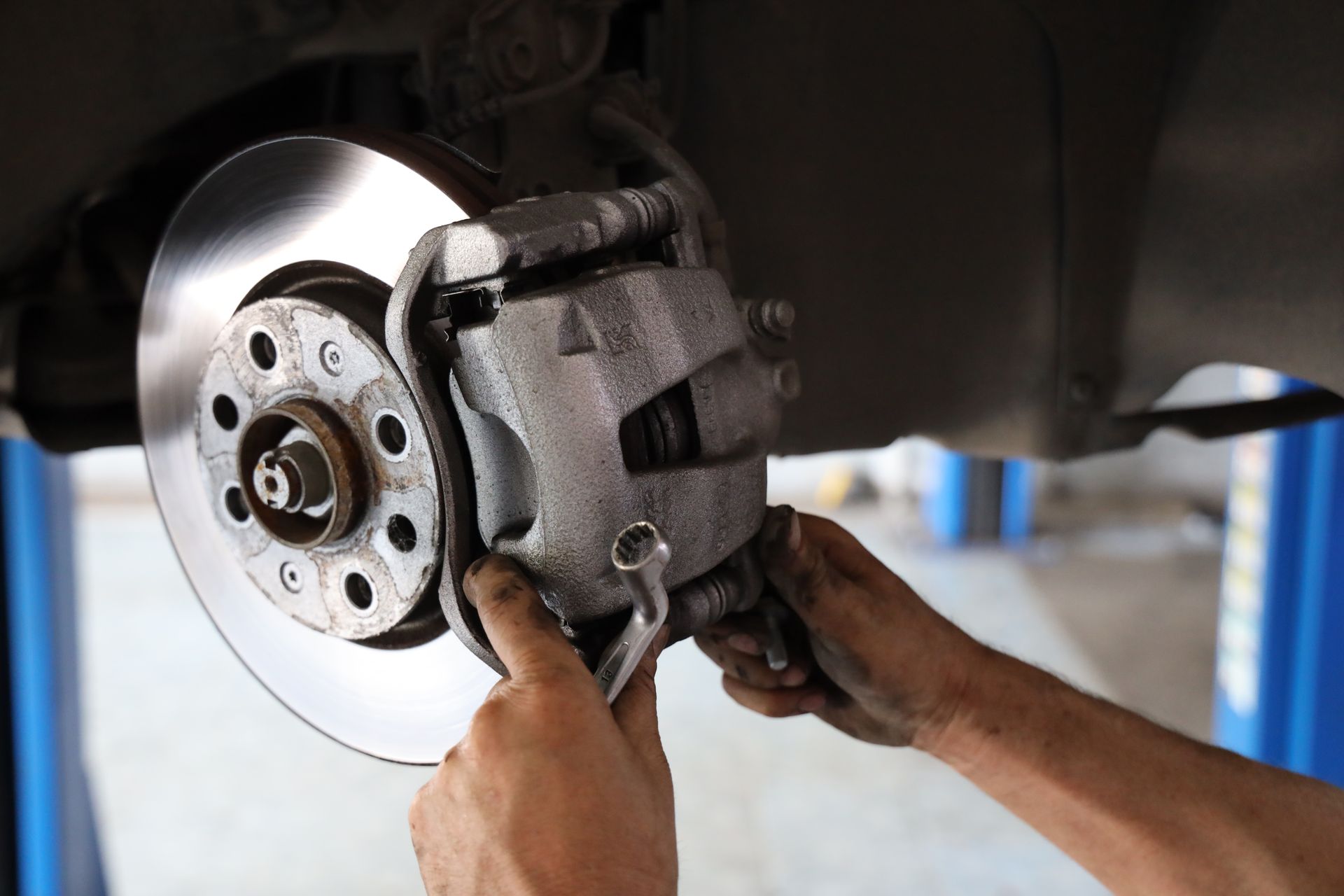
A sticking piston, seized slide pin, or pad binding in its bracket can stop a floating caliper from working as intended. One pad might wear much faster than its partner. A wheel can accumulate more brake dust or become hotter than the opposite wheel after comparable use.
During an inspection, we check the moving parts rather than judging the caliper by the visible outer pad alone. The inner pad is easy to miss through the wheel. We compare brake temperatures with proper equipment, not by touching a wheel or rotor that could be hot enough to burn skin.
A Restricted Hose Can Imitate a Bad Caliper
Flexible brake hoses can deteriorate internally while their outer covering still looks intact. A restriction can interfere with pressure reaching the caliper or with fluid returning after release. This can cause delayed application, persistent drag, or a pull that changes as the brake heats up.
A technician can test whether hydraulic pressure is being retained and compare that with mechanical resistance at the caliper. Opening a hydraulic connection isn't an owner test; it can introduce air and leave the vehicle unsafe. This distinction matters because a replacement caliper won't fix a hose that keeps pressure trapped against it.
Friction Surfaces Need an Even Condition
Oil, grease, or brake fluid on a pad can reduce its grip. Heat damage and uneven pad contact also change braking behavior. New pads on one side alongside a different or heavily worn set on the other can complicate the comparison, especially if the original cause of uneven wear remains.
Pad thickness alone doesn't explain every pull. The repair should address contamination or binding and follow the appropriate axle-set replacement and rotor requirements. Repair a leaking seal or hydraulic component before installing new friction parts. Washing a soaked pad isn't a dependable way to restore consistent braking.
Loose Suspension Parts Can Move the Wheel During a Stop
Braking shifts weight and loads the control arms and their bushings. A separated bushing or loose joint can let a wheel move from its intended position when the brakes apply. The alignment can look acceptable when parked but change on the road under load.
A dull knock, steering movement when transitioning between acceleration and braking, or uneven tire wear strengthens the case for checking suspension support. We also compare tire pressures, condition, and sizes. Adjusting alignment before repairing looseness won't hold the wheel in place, and it can leave the original braking complaint unchanged.
Decide Whether the Car Is Safe to Move
A sharp pull, difficulty staying in the lane, soft pedal, visible fluid leak, smoke, or overheated brake smell calls for stopping use and arranging assistance. Don't repeat hard stops on a public road to find out which side is worse. The symptom can become harder to control as heat builds.
For a mild change, describe when it occurs and arrange prompt diagnosis before it becomes part of your normal driving routine. Regular maintenance can reveal uneven pad wear, but a new pull deserves attention between services. After repairs, check brake release, balance, and steering behavior under safe conditions, not just by a quiet pedal press while parked.
Get Brake Pull Diagnostics In Belmont, NC, With TRC Automotive
TRC Automotive in Belmont, NC, can check brake application, hydraulic release, tires, and suspension movement to explain why the vehicle changes direction while stopping. Mention any pedal change, odor, or recent brake work when booking.